Day 108 – Desert Sunrise, Turbans, and Harsh Lessons on Caste
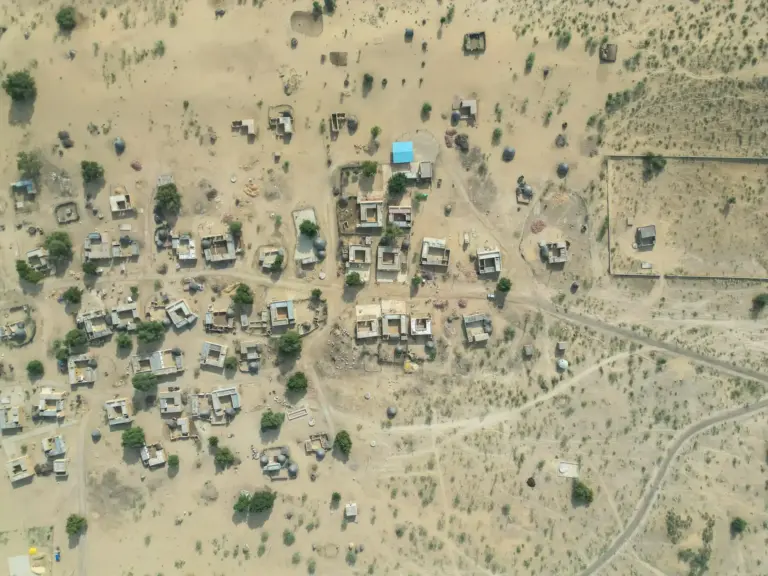
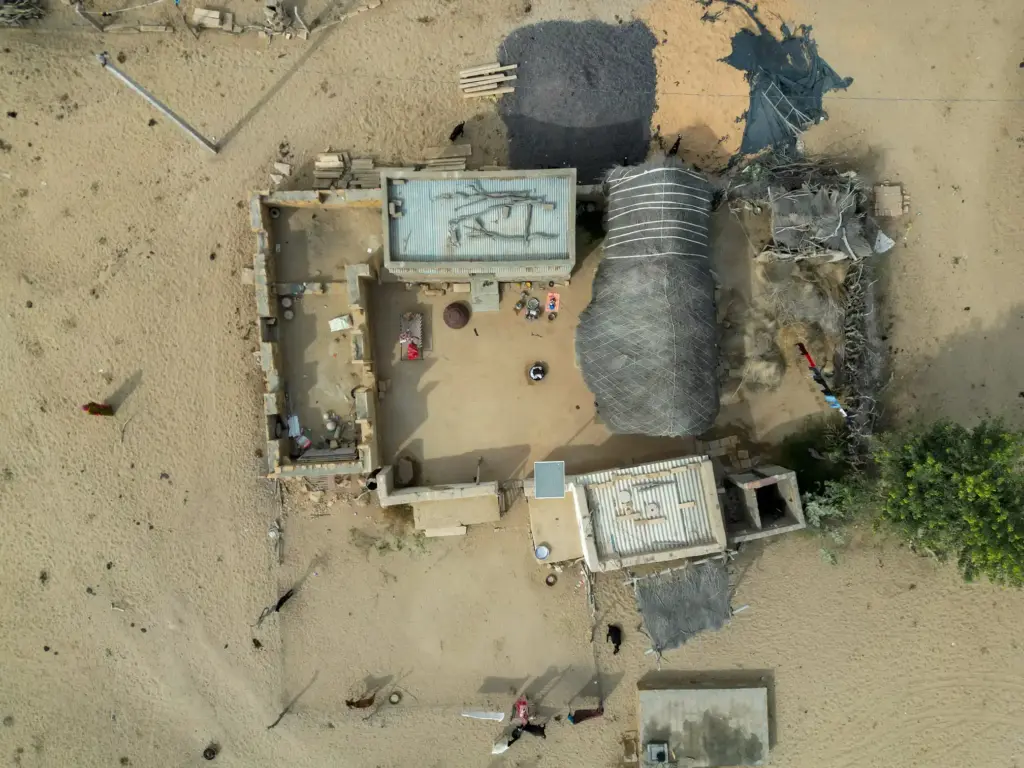
Random village in Thar desert
Day 108 began with one of the most beautiful sunrises of this journey. The room where I slept had just one door, and I had laid down directly facing it. When I woke up, soft colours were already spilling into the room. Only then I realised that this door was perfectly aligned with the sunrise point. As the sky shifted from blue to orange and pink, I watched from my bedding, feeling like the desert had opened a private window just for me.
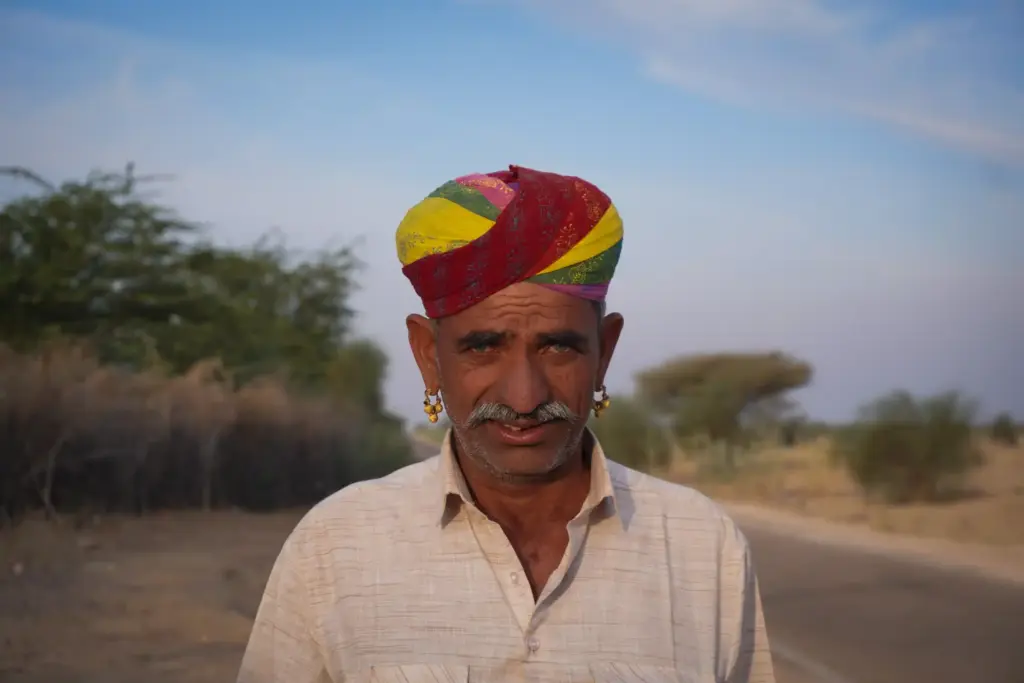
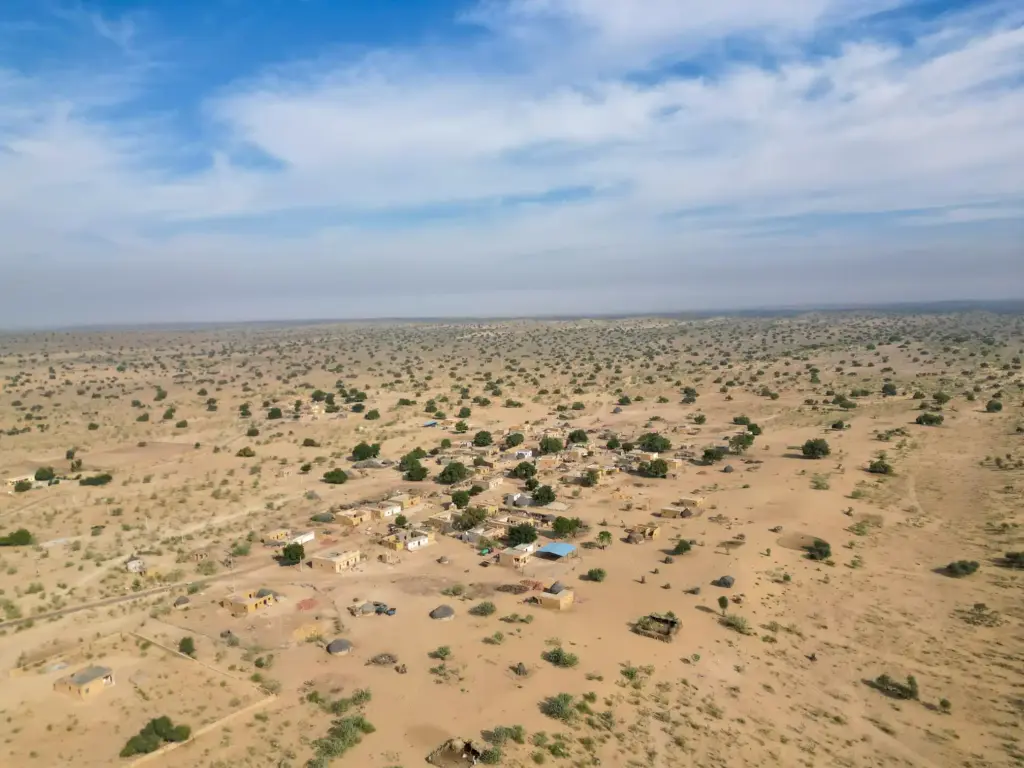
After packing my things, I moved to the main road to cook food for Bhairava for the day. While I was busy with rice and preparations, a man named Lal Singh appeared. He wore a classic Rajasthani turban and heavy earrings that immediately caught my attention; the design and weight made them look like small sculptures hanging from his ears. I took a close-up photo of them, wanting to remember that detail of local style. Then I flew my drone over the surrounding desert and discovered a tiny village with no proper road access, just sandy tracks connecting it to the world.
Lal Singh
Lal Singh Ear ring (Gokhru)
Lorem ipsum dolor sit amet, consectetur adipiscing elit. Ut elit tellus, luctus nec ullamcorper mattis, pulvinar dapibus leo.
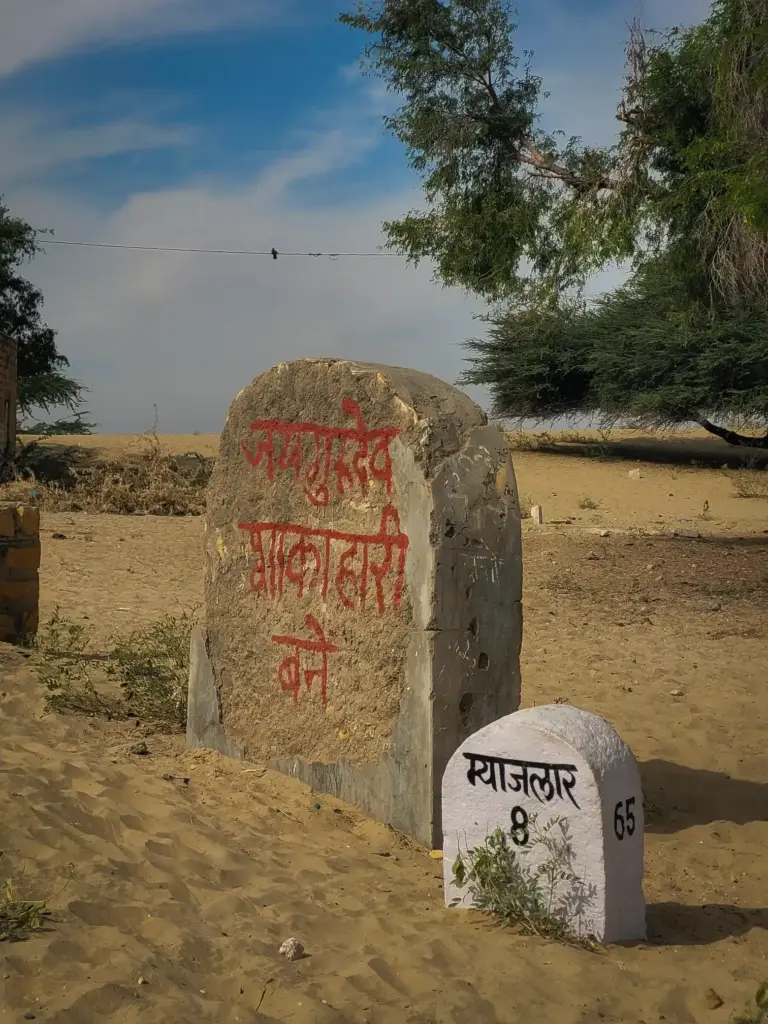
I rode on and stopped at Satto, hoping to find something to eat, but there were no hotels or restaurants at all. Instead, a few local people approached and offered me chai, turning my disappointment into a small moment of warmth. The roads were often covered in blown sand, making the surface unstable and tricky to ride. On one wall, I noticed a message painted in Hindi: “Jai Gurudev, Shakahari Bane” – “Hail to Gurudev, become vegetarian.” In many parts of Rajasthan, especially among upper caste communities, vegetarianism is tied closely to identity. Meat eaters are often seen as lower-status; separate plates and cups may be kept for them, and they may not even be allowed inside certain homes. Along with constant questions about religion, this attitude draws a hard line between people based on what they eat and what they believe.
Satto village
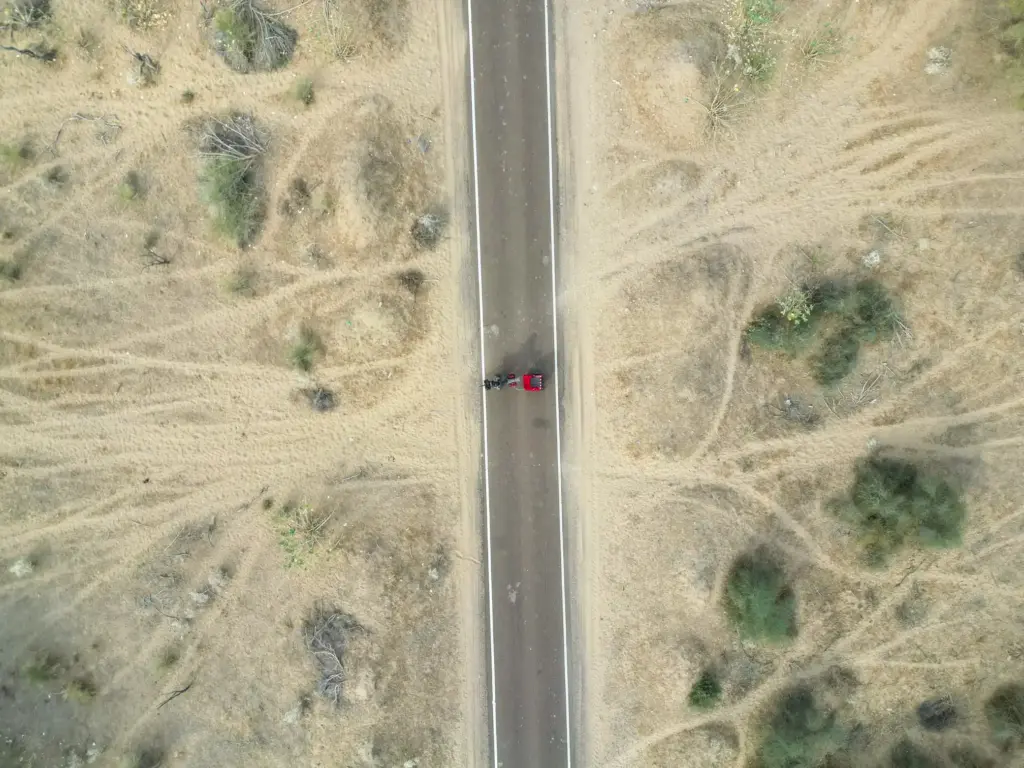
On the way
Later, I headed towards Myajlar, where I finally had lunch, and then rode to Khyali Math, a mutt near Myajlar, hoping to stay and edit some videos in a peaceful environment. The priest there began, as many do here, by asking my caste. When I answered, he pushed further: “Under which category? Brahmin, Kshatriya, Vaishya, or Shudra?” I explained that my father’s faith, Lingayat, does not fall under these four varnas and follows a different path. But for him, the boxes mattered more than the explanation.
He told me clearly that I could not stay inside the main mutt premises at night. Instead, he pointed to some outside rooms and suggested I sleep there. He went on to say that only certain castes are allowed inside; others, if they come, can only clean the premises, not share the inner space. These so-called gurus do not study or teach deep spiritual texts; their focus seemed fixed more on maintaining caste boundaries than on any true spiritual guidance. Some people might say this is an exaggeration, but the conversation was open and direct enough that it will be visible in the YouTube video from this day.
The wall, which says be vegetarian
You can see both traditional and modern housing in the desert
When it was time to eat, the mutt offered me food—but specifically in a paper plate, while steel plates, they said, were reserved for upper caste people. That simple choice of plate carried the full weight of an old system still alive in 2025. Day 108 thus became a mix of awe and anger: a perfect desert sunrise, kind strangers with chai, striking faces like Lal Singh in turbans and earrings, and then a harsh reminder that in many places, caste still decides how close you can come, what plate you can touch, and where you are allowed to sleep.
“On Konkan ride, a 2TB SSD carrying my Sri Lanka and touring footage was lost. Those memories were meant to live inside this film. If you’d like to help replace the drive and keep this documentary on track, there are two ways to support. Subscribe monthly to get early edits, behind‑the‑scenes notes, and GPX route packs. Or make a one‑time contribution to replace the SSD and backup media. Every bit helps, and every supporter will be credited in the film’s thank‑you roll.”