Day 107 – Desert Charcoal, Big Families, and a Sunset I Won’t Forget
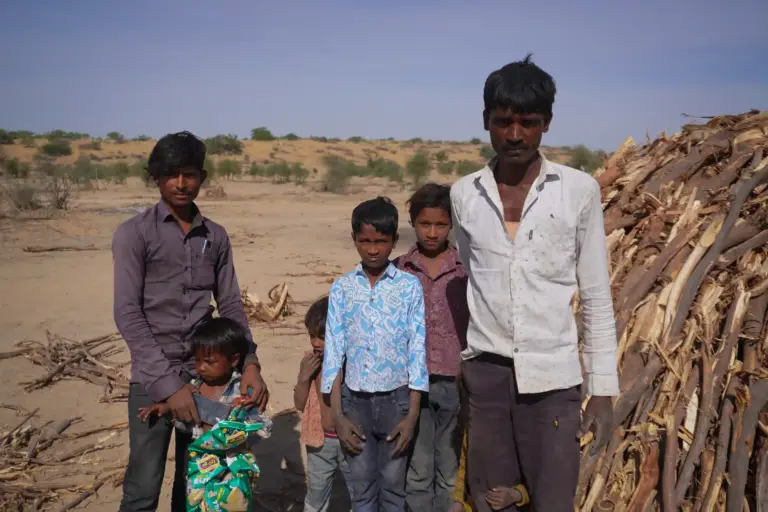
Ram and his family
Day 107 started in Ranasar, in the same small general store where I had slept the previous night. The shop sold tobacco, biscuits, and basic village essentials, and early in the morning everyone gathered around a small fire outside. I sat with them, soaking in the warmth against the desert cold and watching the village slowly wake up. The man who had arranged my dinner the earlier night also appeared again, almost like a continuation of the same kindness. After a quick wash and chai, I rolled back onto the road.
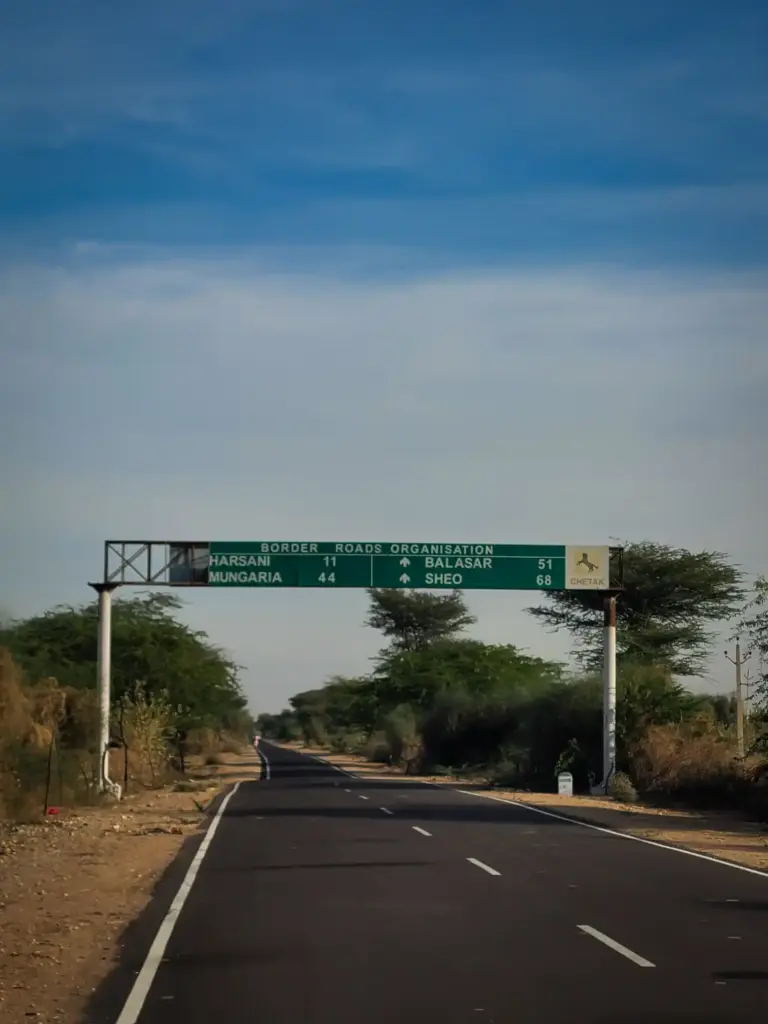
By around 10 AM, I reached Harsani village in Sheo tehsil of Barmer district, a gram panchayat settlement with a few thousand people and a busy life around its main road. There I had a combined breakfast-lunch, and as usual, a crowd formed around my cycle and Bhairava’s trolley. People asked about the journey, the dog, the countries, the cycle setup—every stop in rural Rajasthan becomes a small press conference.
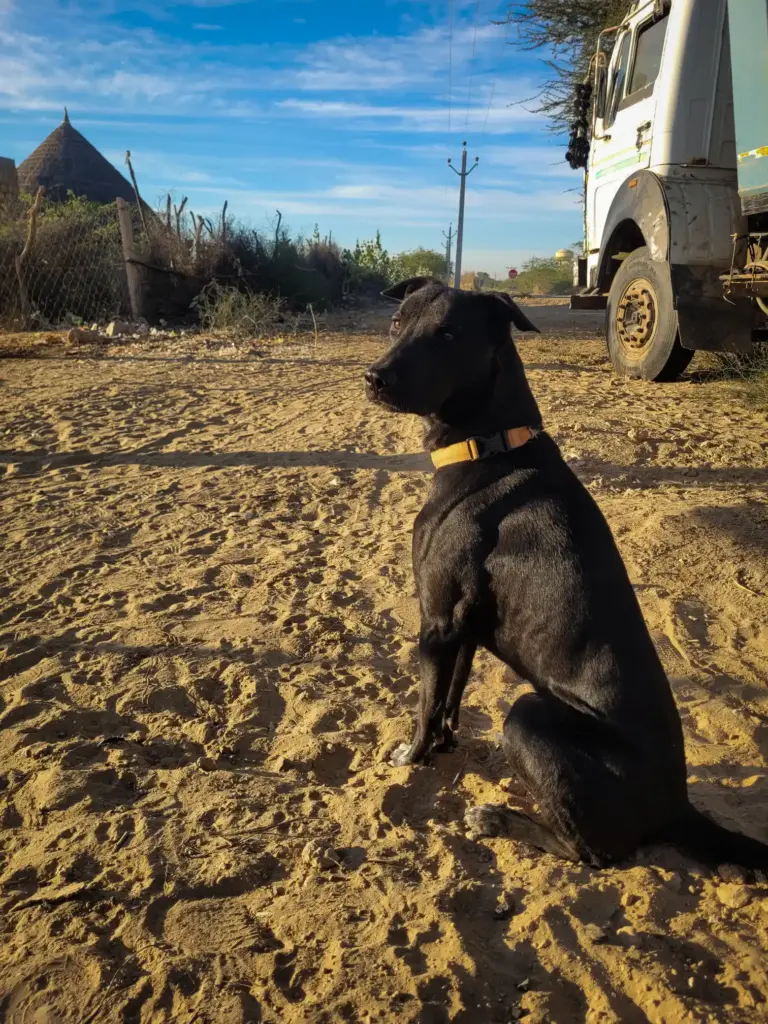
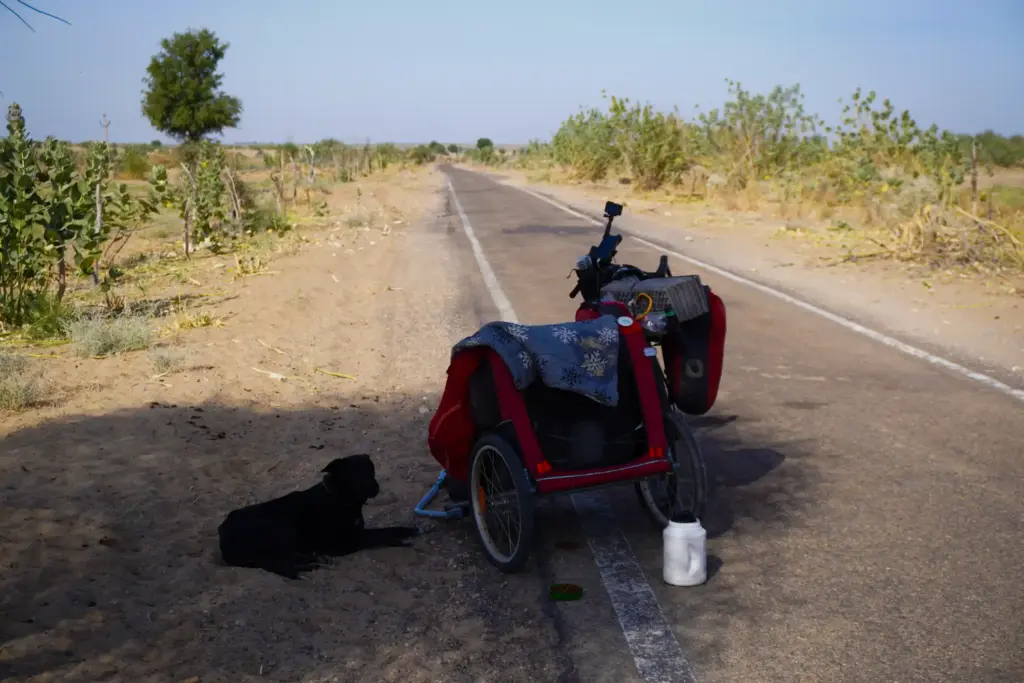
Bhairava getting sun bath
Morning roads
Lorem ipsum dolor sit amet, consectetur adipiscing elit. Ut elit tellus, luctus nec ullamcorper mattis, pulvinar dapibus leo.
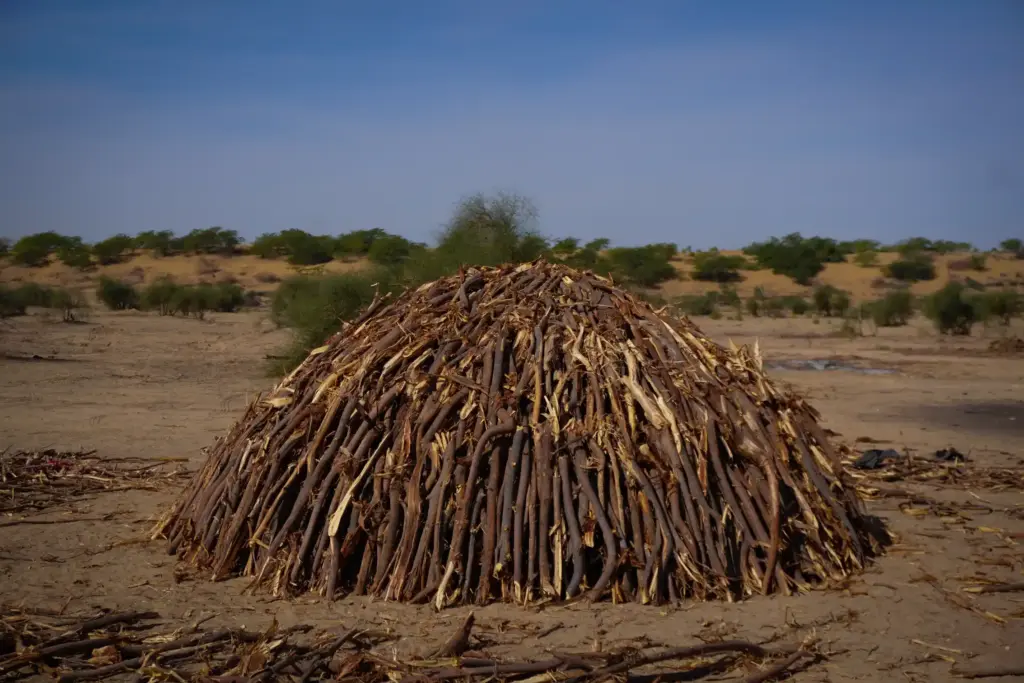
Leaving Harsani, I rode towards Turbi and noticed people working in the fields, not on crops but on wood. They had cut trees a month earlier, and now they were burning them to make charcoal, which they sell at around seven rupees per kilogram—very cheap compared to the normal urban charcoal market price. One family caught my eye; the man’s name was Lalu Ram. He was working with his wife and children in the heat. When I asked how many children he had, he paused and literally started counting on his fingers. That moment said everything about rural Rajasthan’s mix of low literacy, lack of sex education, and almost zero awareness about contraception. Children are “produced,” not planned.
Charcoal production
I gently told him, “Stop making babies. At least send two of them to school.” He smiled and said, “Theek hai,” and I hope some part of that conversation stays with him. In areas like this, where the desert is harsh and income is uncertain, education is the only real way out of the cycle, but it is also the first thing sacrificed.
Towards Girab village, someone stopped me and bought a few water bottles so I could refill and ride safely under the brutal afternoon sun. The desert offers almost no shade; trees are rare, and open stretches feel endless. I stopped for a while just to let Bhairava cool down, making sure he didn’t overheat. Later, I cooked food for him—rice and egg—as another random stranger appeared and insisted that I should stay at his place for the night instead of camping alone.
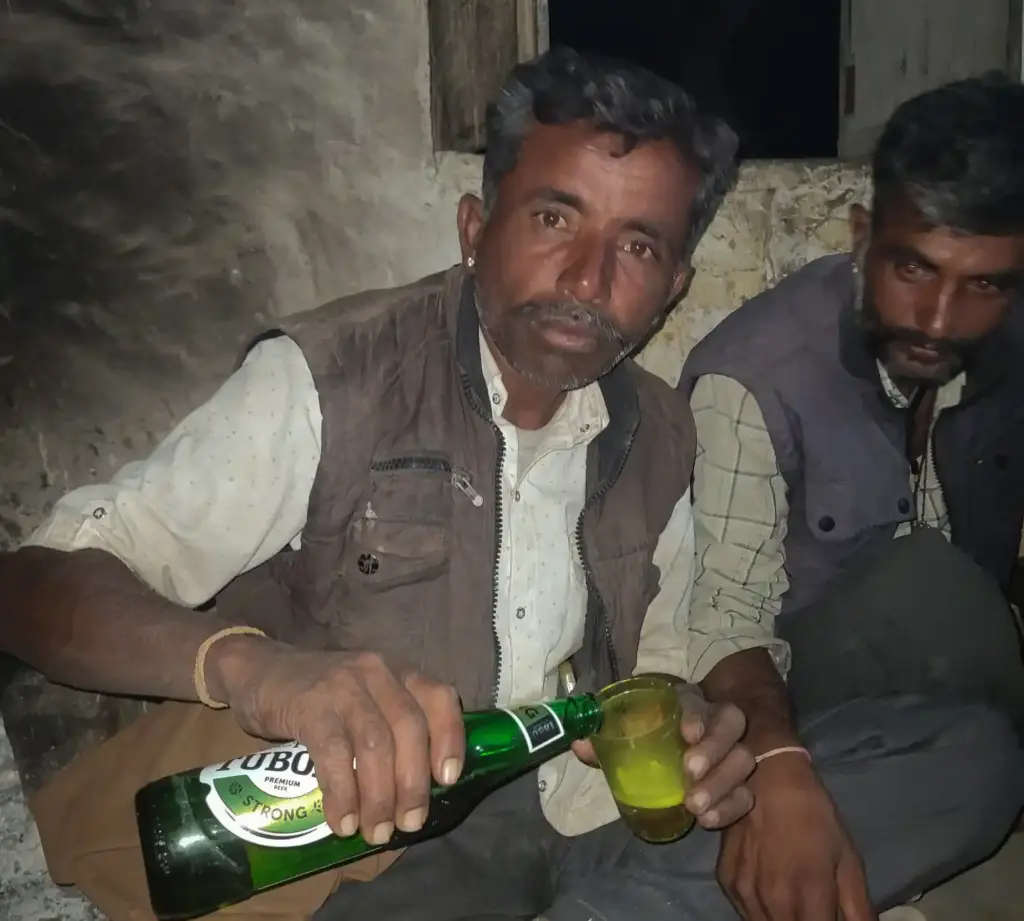
The sunset that evening was one of the most beautiful I have seen in Rajasthan: the sky turning orange and pink, dunes glowing softly, and the air finally cooling after a hot, dry day. At his house, the family started preparing food and also set up an alcohol party for themselves, while I simply enjoyed the meal and the safe shelter. Somewhere between conversation and fatigue, I forgot to save his phone number. By the next morning, he had left at 4:30 AM while I was still asleep, and now I am still searching for his contact through another friend who lives about 15 km away.
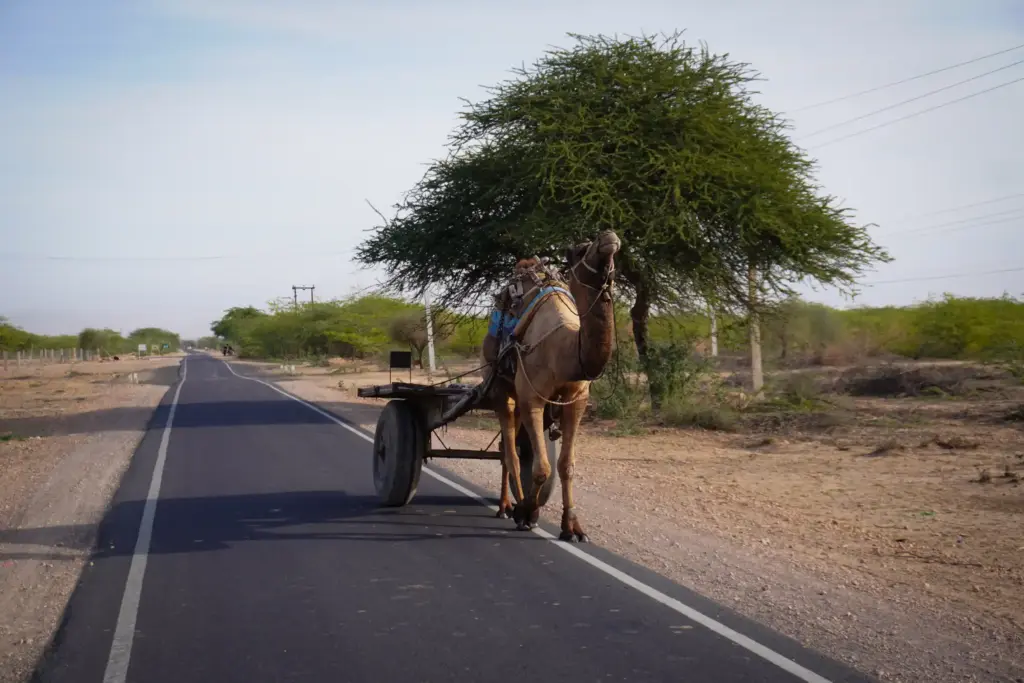
On The Way
Pit Stop
Party With Locals
Day 107 ended with full stomachs for both me and Bhairava, a roof over our heads, and a sunrise on the horizon that would become the highlight of the next blog.
“On Konkan ride, a 2TB SSD carrying my Sri Lanka and touring footage was lost. Those memories were meant to live inside this film. If you’d like to help replace the drive and keep this documentary on track, there are two ways to support. Subscribe monthly to get early edits, behind‑the‑scenes notes, and GPX route packs. Or make a one‑time contribution to replace the SSD and backup media. Every bit helps, and every supporter will be credited in the film’s thank‑you roll.”